
The answer so far
Most people should start with fluids and ordinary food, not an electrolyte product. Extra sodium or potassium matters most when illness, heavy losses, medication or a medical condition changes the balance.
Electrolytes such as sodium and potassium are needed for fluid balance, nerve signalling and muscle function. Their biological roles do not mean everyone needs an electrolyte drink or supplement. Intake, losses, medicines and kidney function all matter.345
On this page
- Sodium and fluid balance
- Potassium: food and important cautions
- Do you need an electrolyte product?
- Does a cramp mean you need electrolytes?
- Are electrolyte drinks more hydrating than water?
- Sports drinks and oral rehydration solutions are different
- Can drinking too much be harmful?
- Read the label and the situation
- Sources
From left to right: a sending cell, a chemical signal and a receiving cell.
Sodium and fluid balance
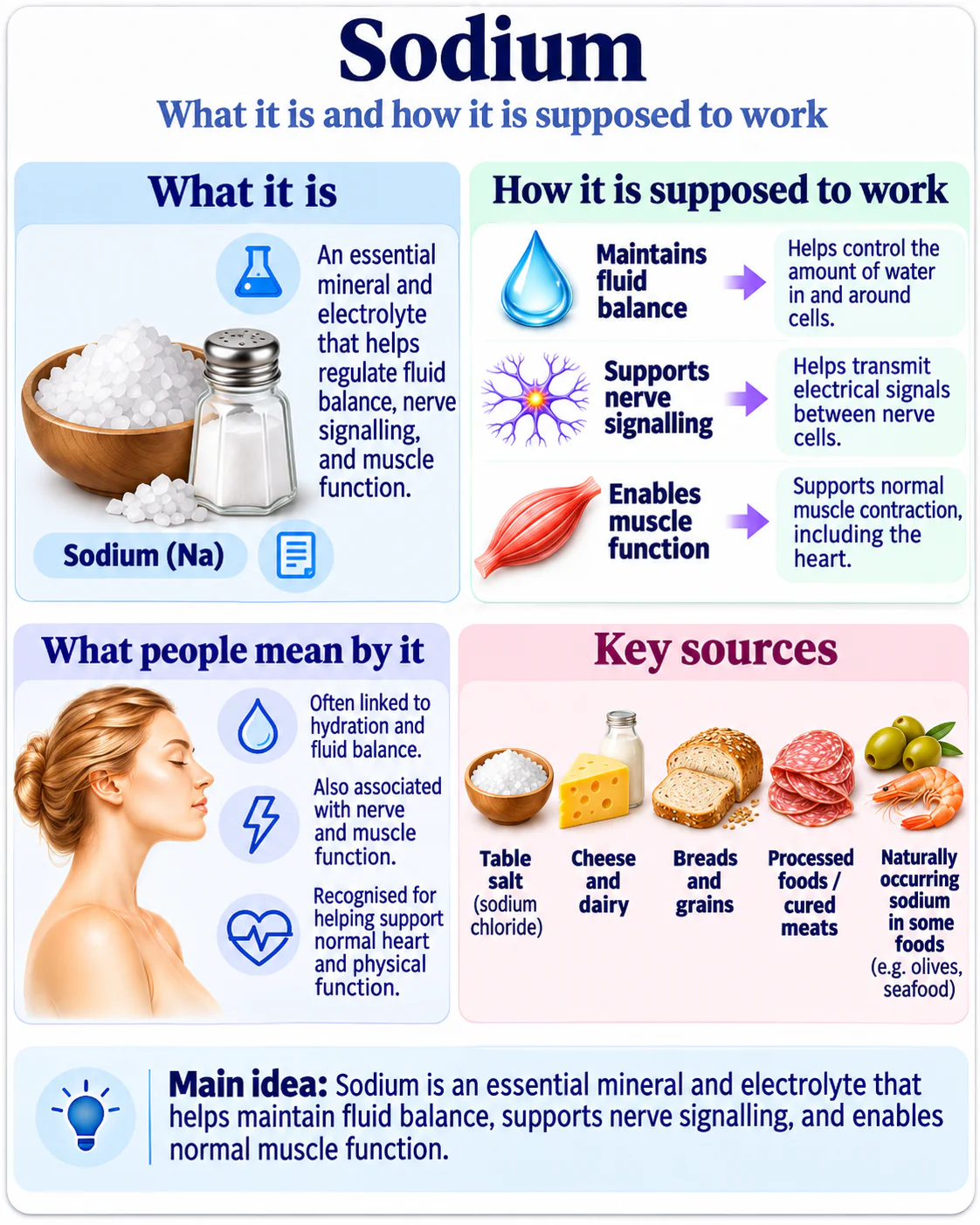
Sodium is involved in fluid balance, nerve signalling and muscle function. It is present in salt and many foods. Too much dietary sodium can contribute to high blood pressure; normal physiological need is not a reason for everyone to take extra salt.3
Read the image summary
Sodium is an essential electrolyte involved in fluid balance, nerve signalling and muscle function. Sources shown include salt, cheese, bread and processed foods. The illustration describes normal biology; too much dietary sodium can raise blood pressure, and extra salt is not needed for everyone.
Illustrations
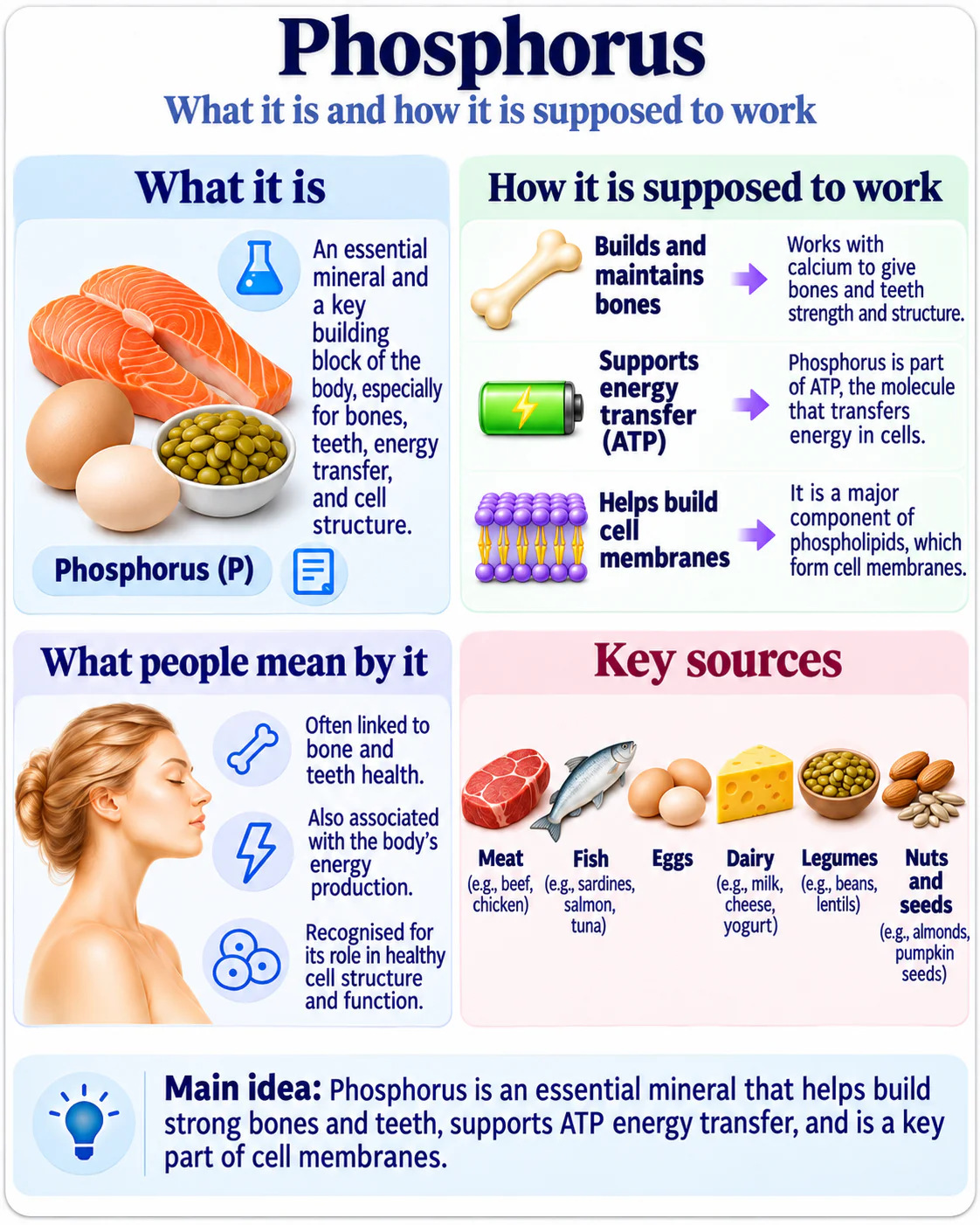
The image describes nutrient functions; it does not establish benefits from extra supplements.
 Open image at full size
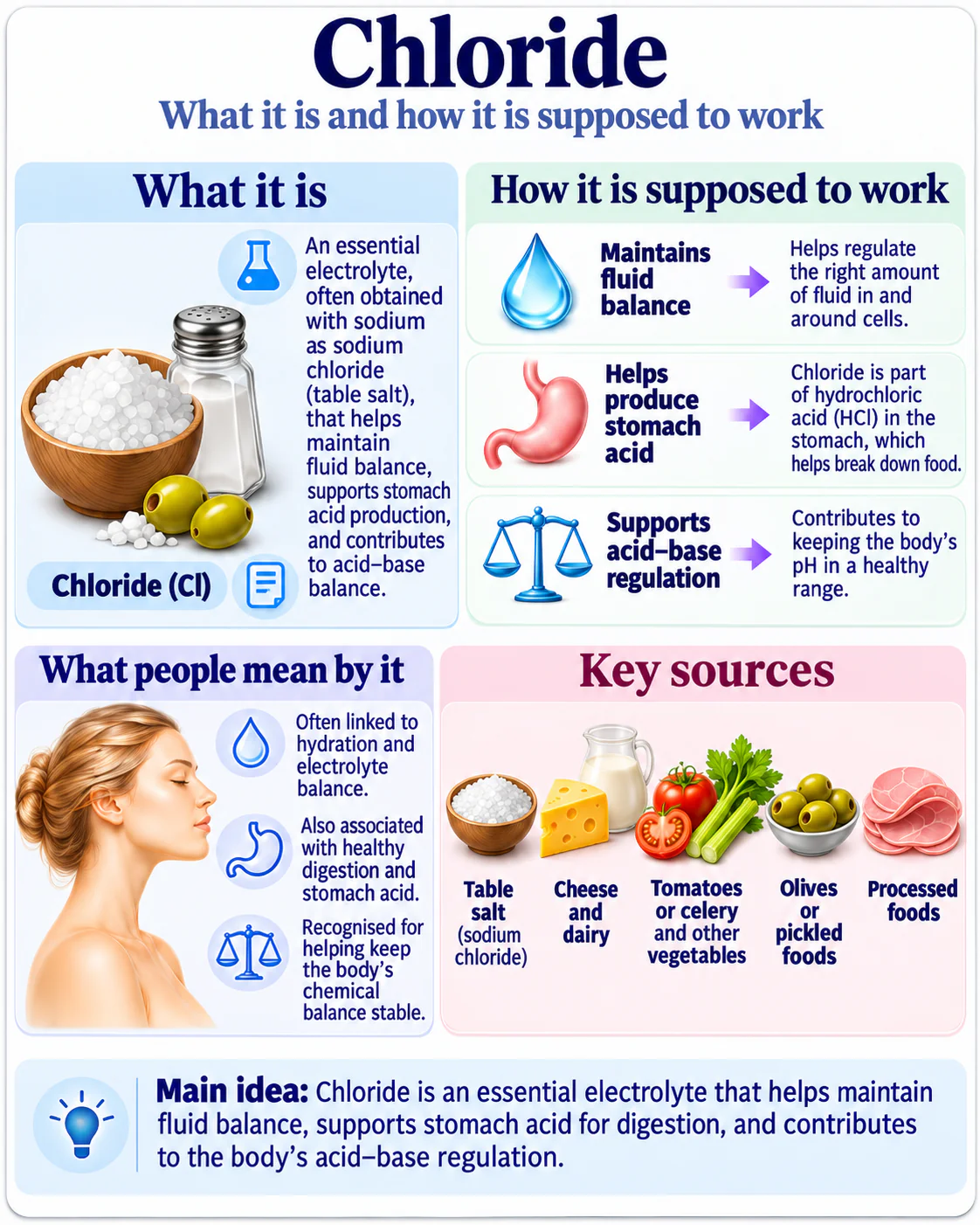
The image describes nutrient functions; it does not establish benefits from extra supplements.
 Open image at full size
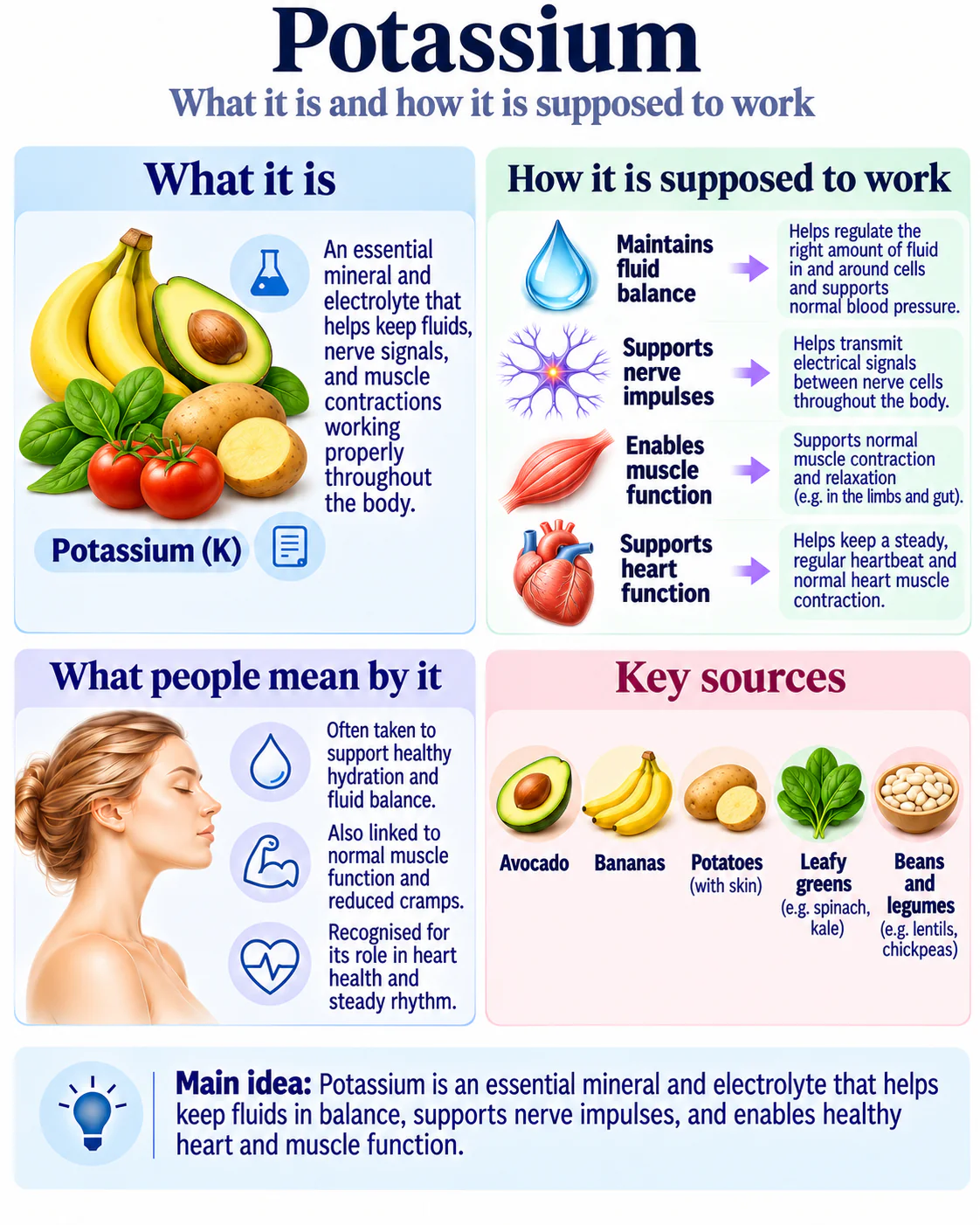
Cramps have many causes; a potassium supplement is not automatically needed and excess can be dangerous.
 Open image at full size
Potassium: food and important cautions
Potassium is involved in nerve signalling, muscle contraction and normal heart function. Foods such as beans, potatoes, greens and bananas contain potassium. Cramps can have several causes, and a cramp alone does not establish a potassium deficiency or show that a supplement will prevent it. Too much potassium can be dangerous, particularly with kidney disease or medicines that reduce potassium excretion; discuss supplements and potassium-containing salt substitutes with a clinician when these risks apply.
Low blood potassium can occur after prolonged vomiting or diarrhoea, or with some diuretics that increase potassium loss. High blood potassium is more likely with reduced kidney function or medicines including ACE inhibitors, ARBs and potassium-sparing diuretics such as spironolactone or amiloride. Both high and low levels can be serious. A clinician may review medicines, kidney function and blood tests; do not change prescribed medicines or start potassium supplements based on cramps alone.
High blood potassium often causes no symptoms. When symptoms occur, either high or low potassium can be associated with weakness or an abnormal heartbeat; these symptoms have other causes and do not identify the potassium level. Seek urgent medical assessment for severe weakness, chest pain, fainting or difficulty breathing. Follow a clinician’s monitoring advice even when you feel well.12410
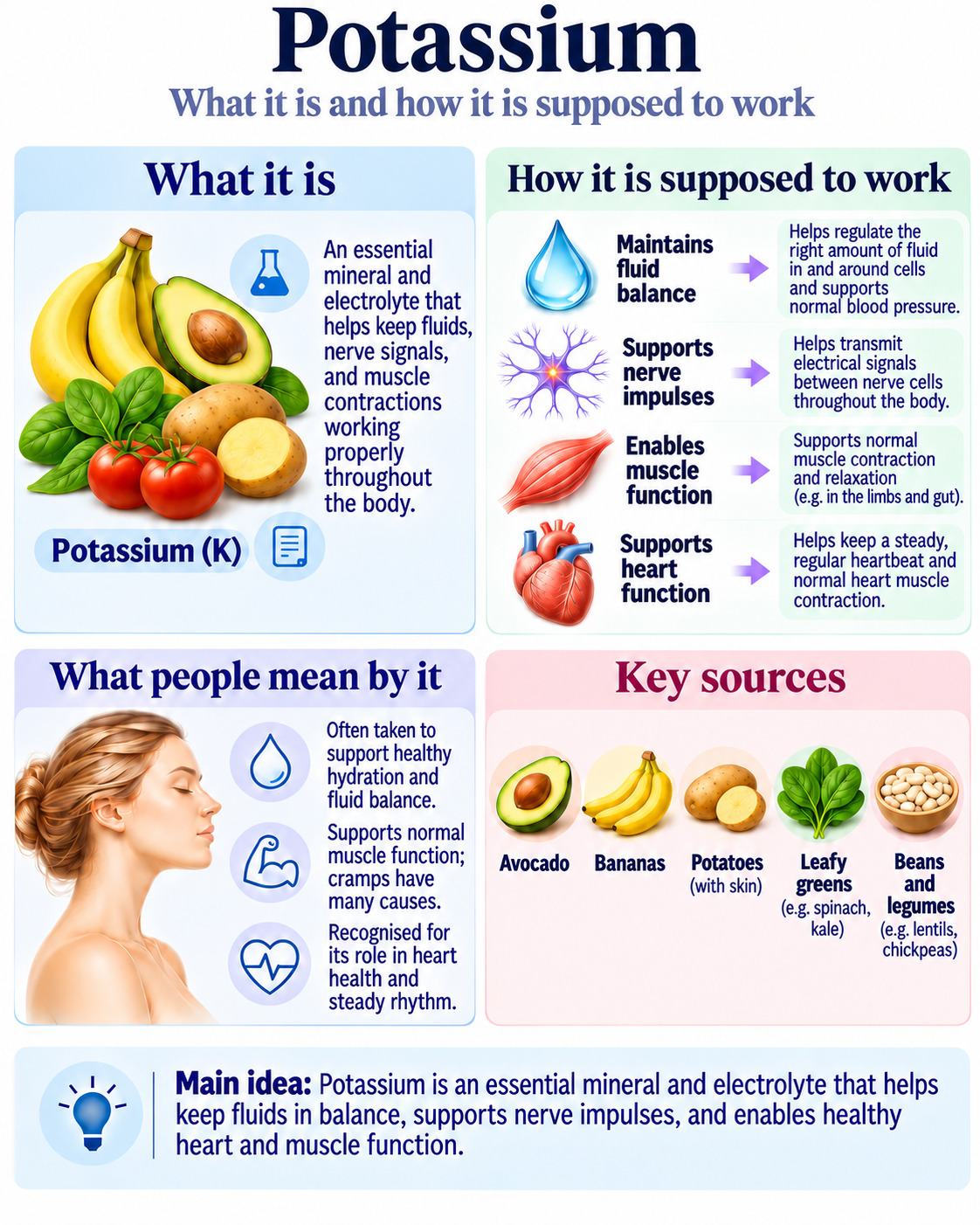
Read the image summary
Potassium is an essential mineral involved in nerve and muscle function and fluid balance. Foods shown include bananas, potatoes, leafy greens, avocado and legumes. The image mentions cramps, but it does not establish that supplements prevent them. Too much potassium can be dangerous, especially with kidney disease or certain medicines.
Do you need an electrolyte product?
For many people, regular meals and adequate water are sufficient for ordinary conditions. Prolonged heavy sweating can change fluid and salt needs; products differ in sodium, other electrolytes and sugar. Neither thirst nor a cramp by itself diagnoses an electrolyte deficiency. People with fluid restrictions, kidney disease or relevant medicines need individual advice.
For practical questions about appetite, meals and nausea with these medicines, see eating and drinking with semaglutide or tirzepatide.54
Does a cramp mean you need electrolytes?
Not necessarily. Cramps have several possible causes, including muscle strain, dehydration, low electrolyte levels, some medicines and medical conditions. The feeling of a cramp alone cannot identify which cause applies.
In a 2004 observational study of ultradistance runners, researchers compared 21 runners who cramped with 22 who did not. Their average post-race blood sodium differed, but the researchers did not find clinically significant electrolyte alterations or differences in the measured indicators of hydration between the groups. This was a small study in one endurance race: blood concentrations and weight changes cannot capture every person’s losses, and an association does not establish cause. It did not test whether an electrolyte drink prevents cramps.
Fluid and salt replacement can matter during prolonged sweating, while extra potassium or magnesium is not automatically appropriate. Cramps that are frequent, severe, long-lasting, accompanied by weakness or swelling, or do not improve deserve medical advice. For the separate question of supplements, see magnesium and its evidence.1213
Are electrolyte drinks more hydrating than water?
Not necessarily. In a 2016 study of 72 healthy men who were already hydrated, researchers compared water with selected drinks and collected urine for four hours. The tested sports drink did not produce a statistically significant difference in urine output from water. Milk and an oral rehydration solution produced less urine over that period, meaning more fluid was retained in that short measurement window. This does not establish that milk, an electrolyte powder or any particular drink improves health, exercise performance or recovery in every situation. The study did not test every product, and its fasted participants, short follow-up and large fixed drink volume limit generalisation. Fluid retention is a measurement, not a universal “hydration multiplier”. The European Hydration Institute funded the study. Ordinary hydration, prolonged sweating and diarrhoeal illness are different situations; product composition and individual circumstances matter.11
Sports drinks and oral rehydration solutions are different
Sports drinks and oral rehydration solutions are designed for different situations and do not necessarily contain the same balance of water, sugar and salts. US CDC guidance says oral rehydration solutions can help replace losses in severe diarrhoeal illness and that sports drinks do not replace those losses correctly. Ask a health professional about the right product and when assessment is needed, particularly for infants, older adults, severe symptoms or ongoing fluid loss. An electrolyte drink label alone does not establish that it is an oral rehydration solution.6
Seek prompt medical advice for bloody diarrhoea, a high fever, vomiting that prevents keeping fluids down, or signs of dehydration such as very little urine, a dry mouth or dizziness on standing. Do not wait for a drink to resolve severe symptoms.7
Can drinking too much be harmful?
Yes. During prolonged endurance activity, drinking more fluid than the body can clear can dilute sodium in the blood, a condition called exercise-associated hyponatraemia. A 2005 study of 488 Boston Marathon finishers with usable blood samples found low sodium in some runners and an association with weight gain during the race; it did not establish a risk for every exerciser or a personal drinking target. Confusion, collapse or other severe symptoms during or after exertion require urgent medical assessment, because the cause cannot be diagnosed from symptoms alone.
Of 766 runners enrolled, 488 provided a usable finish-line sample. In that tested group, 62 (13%) had blood sodium at or below the study’s low-sodium threshold; three (0.6%) had a critically low measurement. A blood result does not by itself describe symptoms or prove what caused it. The missing samples and the single race limit how widely these percentages can be applied.
A sports drink or salt capsule does not reliably prevent this problem if a person continues to drink more fluid than their body can clear. Sports-medicine guidance notes that sodium may lessen a fall in blood sodium in some situations, but it does not correct ongoing excess fluid intake. Sweat losses, heat, duration and health conditions still matter; this does not mean everyone should avoid replacing salt after heavy sweating. Do not try to diagnose or treat confusion or collapse with a drink: seek emergency help.891415
Read the label and the situation
Compare the serving size, sodium, potassium and any added sugar with the rest of the diet. Product marketing does not establish that an electrolyte blend prevents symptoms or is safe for a particular person. See the label guide and interaction guide.54
Further reading
Trusted external resources selected to help explain this page. They open in a new tab.
- Food safety information for healthcare professionals ↗Distinguishes oral rehydration solutions from sports drinks; individual care depends on circumstances.
- Hyponatremia among runners in the Boston Marathon ↗Selected marathon finishers, not a test of all hydration products or a universal intake recommendation.
- A randomized trial to assess the potential of different beverages to affect hydration status: development of a beverage hydration index ↗Short-term drink comparison in hydrated men; not a test of every electrolyte product.
Sources, kept close.
Selected supporting sources; this is not a complete literature review.
- High potassium levelMedlinePlus / U.S. National Library of Medicine · Clinical reference; United States
- Potassium blood testMedlinePlus / U.S. National Library of Medicine · Clinical test information; United States
- Sodium in dietMedlinePlus / U.S. National Library of Medicine · Official health reference
- Potassium: Health Professional Fact SheetNIH Office of Dietary Supplements · Official health reference
- Heat Stress: HydrationCDC / National Institute for Occupational Safety and Health · Official health reference
- Information for Healthcare Professionals: Food SafetyU.S. Centers for Disease Control and Prevention · Public-health guidance for healthcare professionals; United States
- Food Poisoning SymptomsUS Centers for Disease Control and Prevention · Public health guidance
- Hyponatremia among runners in the Boston MarathonNew England Journal of Medicine / PubMed · Observational endurance-event study; United States; 2005
- Heat Stress: HydrationU.S. National Institute for Occupational Safety and Health / CDC · Occupational heat and hydration guidance; United States; 2017
- Muscle crampsMedlinePlus, U.S. National Library of Medicine · Official patient health information; United States
- A randomized trial to assess the potential of different beverages to affect hydration status: development of a beverage hydration indexAmerican Journal of Clinical Nutrition / PubMed · 2016 UK randomized beverage comparison in 72 hydrated men
- Serum electrolyte concentrations and hydration status in distance runners with exercise-associated muscle crampsBritish Journal of Sports Medicine / PubMed · Prospective observational study, 2004
- Muscle CrampsMedlinePlus, US National Library of Medicine · Public health information
- Wilderness Medical Society Clinical Practice Guidelines for the Management of Exercise-Associated Hyponatremia: 2019 UpdateWilderness & Environmental Medicine · Clinical practice guideline
- Electrolyte supplements: concerns and considerationsAustralian Institute of Sport / Australian Sports Commission · Sports nutrition guidance