
The answer so far
Before following a biochemical pathway, ask which nutrient need is relevant to you and whether food already supplies it. A normal role does not automatically justify a supplement.
The body needs more than vitamins and minerals. Choline, essential fatty acids, adequate protein and water all matter; dietary fibre also supports health. They have different biological roles, food sources and evidence. The nutritional importance of a substance does not by itself prove that extra supplementation benefits everyone.12356
On this page
Essential nutrition beyond vitamins and minerals. Choose a step to explore this subject in more detail.
Choline: membranes and signalling
Choline is an essential nutrient. The body uses it to make components of cell membranes and acetylcholine, a chemical messenger involved in nerve and muscle function. These membrane components are called phospholipids. It also participates in fat transport and metabolism. The liver makes some choline, but not generally enough to meet all needs; food sources and individual needs vary. Phosphatidylcholine and lecithin are related product forms, not proof that every choline supplement improves memory or liver health. Explore the choline profile for food sources and product claims.1
Illustrations
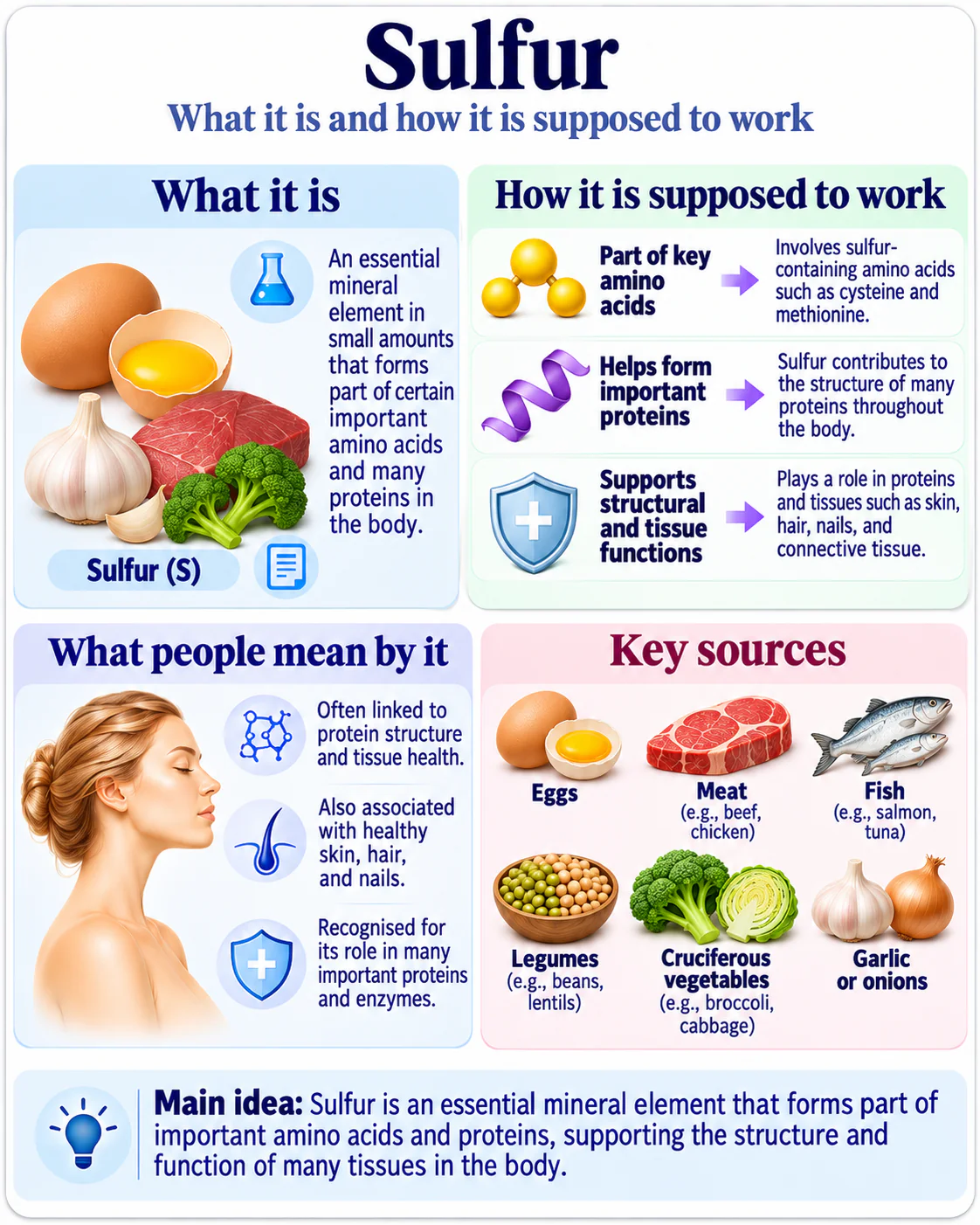
The image describes nutrient functions; it does not establish benefits from extra supplements.
 Open image at full size
Essential fats and the omega-3 family
Alpha-linolenic acid (ALA), an omega-3, and linoleic acid, an omega-6, are essential fatty acids obtained from the diet. EPA and DHA are longer-chain omega-3s with important roles; DHA is especially abundant in brain and retinal membranes. The body can convert some ALA to EPA and DHA, but conversion is limited. EPA and DHA are not classed as essential in the same way as ALA and linoleic acid for healthy adults. Food, fish oil, algal oil and named prescription preparations are different interventions. Read the omega-3 profile for sources and evidence.2
Protein and amino acids
Protein supplies amino acids used to make and maintain body tissues, enzymes and other proteins. Nine amino acids are essential because the body cannot make enough of them. Different foods contain different amounts, and some amino acids may become conditionally essential in particular circumstances. A protein powder is one way to obtain protein; whether it improves an outcome depends on a person's overall diet, activity and circumstances. Compare protein products and the evidence on muscle.34
Fibre and water
Dietary fibre includes diverse components of plant foods. Some soluble fibres can lower cholesterol, while other fibres help stool move through the gut; effects depend on the fibre and outcome. Fibre is important for health but is not an essential nutrient in the same biochemical sense as an essential fatty acid. Water participates in normal body processes and temperature regulation. Fluid needs vary with health, climate and activity; people with fluid restrictions need individual advice. Explore electrolytes and hydration for sodium and potassium. Read the fibre and psyllium profile for practical details.56
A word about names and products
ALA can mean alpha-linolenic acid or alpha-lipoic acid; they are different substances. A nutrient's role in normal physiology is not proof that taking more prevents disease. Ask which ingredient and form were studied, in whom, against what comparison, and for which outcome. Use the label guide and interaction guide before interpreting a product claim.27
Sources, kept close.
Selected supporting sources; this is not a complete literature review.
- Choline: Health Professional Fact SheetNIH Office of Dietary Supplements · Official nutrition evidence summary
- Omega-3 Fatty Acids: Health Professional Fact SheetNIH Office of Dietary Supplements · Official nutrition evidence summary
- Protein in dietMedlinePlus · U.S. National Library of Medicine consumer reference
- Nutrition and athletic performanceMedlinePlus · U.S. National Library of Medicine consumer reference
- FiberMedlinePlus / U.S. National Library of Medicine · Official nutrition reference
- Water in dietMedlinePlus / U.S. National Library of Medicine · Official nutrition reference
- Questions and Answers on Dietary SupplementsU.S. Food and Drug Administration · Regulator consumer guidance