
The answer so far
Coenzyme A and acyl carrier protein help cells handle fats and other metabolic reactions; this normal role does not by itself show that extra pantothenic acid improves outcomes.
Pantothenic acid is needed to form coenzyme A and acyl carrier protein, which participate in fat and other metabolic pathways. Nutritional adequacy and the effects of taking extra supplements are different questions.1
On this page
What the nutrient does
Pantothenic acid helps the body make coenzyme A and acyl carrier protein. These help cells process fats and carry out other metabolic reactions.1
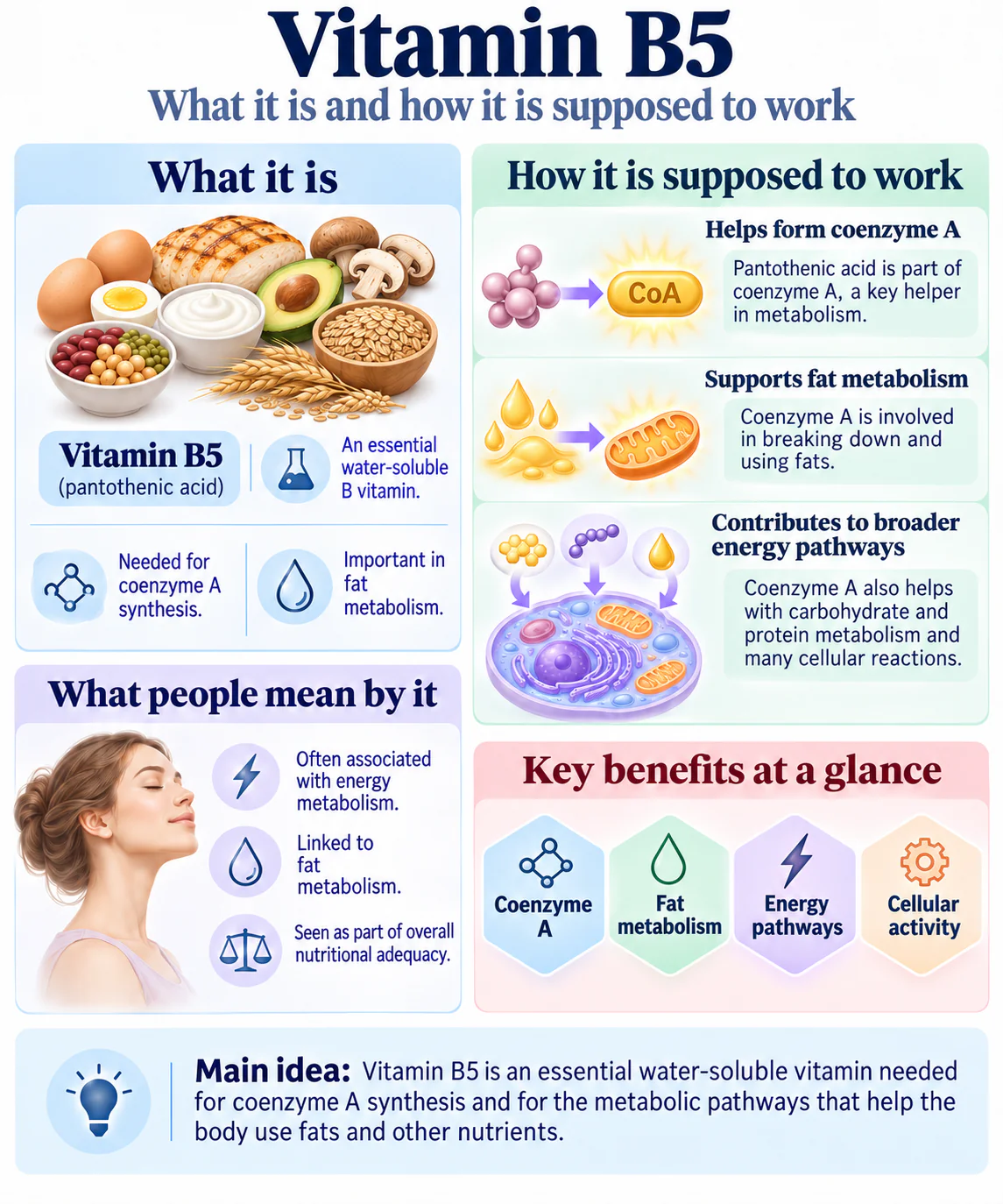
Read the image summary
Vitamin B5, or pantothenic acid, helps form coenzyme A, which is involved in fat, carbohydrate and protein metabolism. The image shows eggs, poultry, dairy, legumes, mushrooms and grains. Nutritional adequacy does not establish a benefit from extra supplementation.
Food and deficiency
A wide variety of plant and animal foods contain pantothenic acid, including meat, eggs, dairy, legumes and whole grains. Deficiency is rare and generally occurs alongside severe malnutrition and other nutrient deficiencies. Very high supplemental intakes can cause digestive symptoms; individual concerns warrant clinical advice.
The US Food and Nutrition Board has not set an upper intake level for pantothenic acid; that does not establish that unlimited supplements are safe. NIH says there are no known clinically relevant medicine interactions with pantothenic acid, but this does not establish the safety of every combination product. Discuss medicines and the exact supplement with a clinician or pharmacist.
For dietary context, the US adequate intake is 5 mg a day for adults, 6 mg during pregnancy and 7 mg while breastfeeding. These are estimates of total intake from food and supplements, not recommended supplement doses.1
Does vitamin B5 help acne?
A small study offers a possible signal, not a clear answer for every B5 supplement. In a 2014 trial, 48 adults with mild to moderate facial acne were randomized to a particular high-dose, pantothenic-acid-based product or placebo for 12 weeks; 41 were evaluable. The researchers reported a greater reduction in total facial lesions with the product. It contained other ingredients, so the study cannot isolate the effect of B5 alone, and the seller sponsored the research.
Its size and duration cannot establish long-term safety or predict results with other products. The tested daily serving contained 2.2 grams of pantothenic acid, and the study excluded pregnant and breastfeeding people. This is a description of the study product, not a recommended dose. A topical panthenol cream and an oral supplement are different formulations and cannot be treated as interchangeable. A clinician can discuss acne and established treatment options.21
What a supplement claim needs to show
A role in fat metabolism does not establish that extra B5 causes weight loss or improves energy when nutritional needs are already met. Compare products using the supplement label guide and discuss personal concerns with a qualified professional.1
Further reading
Trusted external resources selected to help explain this page. They open in a new tab.
- Pantothenic-acid-based supplement for acne: a randomized trial ↗Small 12-week study of a specific multi-ingredient product, sponsored by its seller.
Sources, kept close.
Selected supporting sources; this is not a complete literature review.
- Pantothenic acid: Health Professional Fact SheetNIH Office of Dietary Supplements · Official nutrition evidence summary
- A Randomized, Double-Blind, Placebo-Controlled Study of a Novel Pantothenic Acid-Based Dietary Supplement in Subjects with Mild to Moderate Facial AcneDermatology and Therapy / Springer Nature · 2014 US randomized placebo-controlled clinical trial; industry sponsored