
The answer so far
Vitamin A supports vision, immune function and normal growth. It comes as preformed vitamin A in some animal foods and supplements, and as provitamin A carotenoids such as beta-carotene in some plants. Too much preformed vitamin A can be harmful, particularly during pregnancy; high-dose beta-carotene supplements have separate risks for people who smoke or used to smoke.12
On this page
- First distinction: two forms of vitamin A
- From a carrot to the eye: what happens inside the body?
- Could someone have too little?
- What if you take medicines or several supplements?
- Does an eye supplement improve everyone’s vision?
- Deficiency and excess
- Why pregnancy needs product-specific advice
- What did the CARET trial find?
- Check the whole label
- Sources
Before you read the detail
What it is
A nutrient supporting vision, immune function and growth, present as preformed vitamin A or provitamin A carotenoids.12
What human evidence shows
Deficiency can harm sight; specific AREDS2 combinations may help some people with macular degeneration, but AREDS2 does not establish a benefit from vitamin A itself or from extra vitamin A for everyone.64
Main cautions
Too much preformed vitamin A can harm, especially during pregnancy; high-dose beta-carotene has separate risks for smokers and former smokers.57
Current status
Form, dose, diagnosis and country-specific guidance determine suitability.2
First distinction: two forms of vitamin A
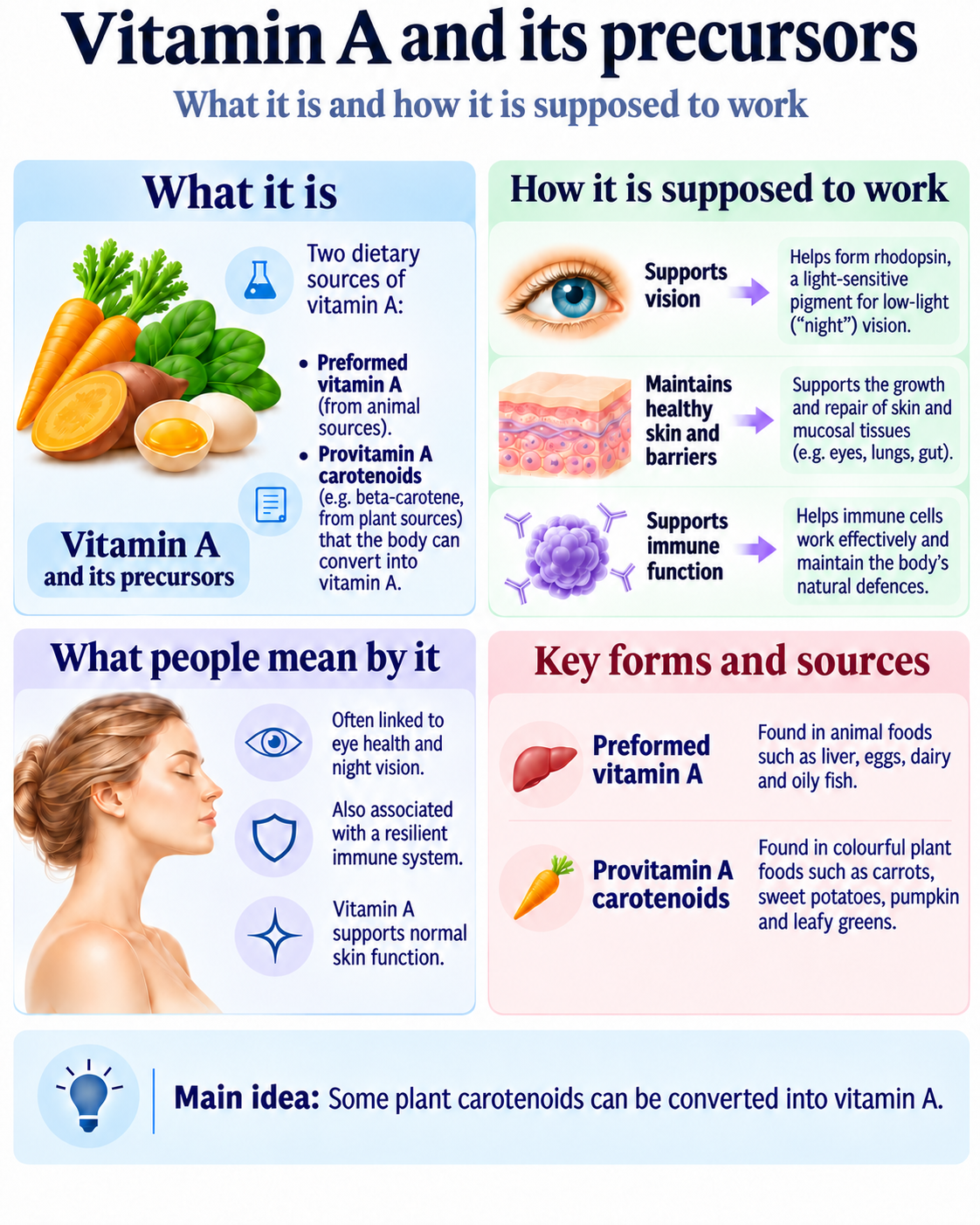
Preformed vitamin A includes retinol and is found in foods such as liver, fish and dairy, and in some supplements. Provitamin A carotenoids, including beta-carotene, occur in foods such as carrots, sweet potatoes and leafy greens; the body can convert some into vitamin A. Their effects and risks are not interchangeable. A normal role in the body does not show that additional supplements improve health for everyone.
The illustration also shows eggs and pumpkin as food examples. Vitamin A helps form rhodopsin for vision in dim light and supports skin and mucosal tissues and normal immune function. People often associate it with eye health, skin and immunity; those roles do not prove that extra supplements help when intake is adequate.1
Illustrations
Only some carotenoids can be converted to vitamin A. These normal nutrient functions do not establish a benefit from extra supplements.
 Open image at full size
From a carrot to the eye: what happens inside the body?
A carrot contains beta-carotene, a plant pigment the body can convert into vitamin A. Liver or cod liver oil supplies preformed vitamin A: the conversion step is different. Not all carotenoids make vitamin A; lutein and zeaxanthin, for example, do not.
After absorption in the gut, much of the body’s vitamin A is stored in the liver. The body uses different forms for different jobs. One form, retinal, helps the eye respond to light; another, retinoic acid, helps regulate how cells develop. These normal functions do not mean extra vitamin A will improve vision or skin in someone who already has enough. See how food can affect vitamin absorption. Explore the full journey from food to vitamin A. For skin claims and the difference between a serum and a medicine, read vitamin A, retinol and skin.
For a deeper look at transport, storage and the different forms used in the eye and other tissues, follow vitamin A through the body.5
Could someone have too little?
Inadequate intake is one cause of deficiency, but problems absorbing fat can also make vitamin A harder to absorb. Deficiency is an important public-health problem in some parts of the world and may affect people with certain medical conditions elsewhere. Night blindness can be an early sign, but it has other causes too.
Blood retinol can help identify significant deficiency, yet a result alone does not always reflect liver stores: infection and inflammation can affect levels. A clinician interprets symptoms, diet, medical history and tests together. Do not assume a supplement is needed from a symptom alone. For the different causes of difficulty seeing in dim light, see vitamin A and night vision. For children, programmes and measles, read vitamin A in childhood. For the difference between correcting a deficiency and broader immune claims, see the immune-support guide.5
What if you take medicines or several supplements?
The US NIH says orlistat, used for weight management, can reduce absorption of vitamin A and other fat-soluble vitamins. The US Xenical label says its effect on absorption of supplemental vitamin A is unknown; see the interaction guide below for this distinction. Some oral retinoid medicines, including acitretin and bexarotene, can increase the risk of vitamin A toxicity when combined with vitamin A supplements. These are different situations, so check the exact medicine and product with a pharmacist or prescriber rather than changing a dose yourself.59
A multivitamin and cod liver oil may both list vitamin A. The form and amount on each label matter; “fish oil” and “cod liver oil” are not interchangeable names for the same product. Use the label guide and interaction guide to prepare a complete product list. For the different directions of these interactions, see vitamin A, orlistat and oral retinoids.5
Does an eye supplement improve everyone’s vision?
Vitamin A is essential for normal vision, and deficiency can harm sight. That is a different question from whether an eye supplement helps someone without deficiency. The AREDS and AREDS2 studies examined particular supplement combinations for age-related macular degeneration, an eye disease that affects central vision. The National Eye Institute says AREDS2 supplements may help some people with intermediate disease in one or both eyes, or slow progression in the other eye when one eye has late disease. They do not prevent early disease from progressing to intermediate disease. The older AREDS formula contained beta-carotene, a concern for people who smoke or used to smoke. Ask an eye-care professional what applies to a specific diagnosis. For the studies, product differences and what the numbers mean, read AREDS and AREDS2 eye supplements.56
Deficiency and excess
Vitamin A is needed for vision, immune function and growth. Deficiency can cause eye problems and is an important public-health concern in some settings. Excess preformed vitamin A can also cause harm, including liver problems. High intakes of beta-carotene do not cause the same toxicity as preformed vitamin A, although supplements have other concerns in certain groups. Product form and total intake matter. For accidental exposure, longer-term excess and poison-service contacts, see too much vitamin A. To understand the difference between normal immune function and an “immune boost” claim, read vitamin A and immunity.1
Why pregnancy needs product-specific advice
Excess preformed vitamin A can harm a developing baby. UK NHS guidance advises avoiding supplements containing vitamin A as retinol, including cod liver oil, during pregnancy, and avoiding liver and liver products. Guidance and product composition differ by country; a midwife, pharmacist or clinician can help assess a specific product. Follow your medicine’s specific instructions: UK MHRA materials say that if you suspect pregnancy or have unprotected sex during oral isotretinoin treatment, stop taking it immediately and seek medical advice. Seek urgent advice too if this happens within one month after stopping. For planning, prenatal labels and retinoid medicines, read vitamin A in pregnancy and planning.2178
What did the CARET trial find?
CARET randomly assigned 18,314 people with a history of smoking or asbestos exposure to a combination of beta-carotene and preformed vitamin A supplements or placebo. The trial stopped early after the combination showed increased lung-cancer risk and overall mortality. Because the two ingredients were given together, this comparison cannot isolate each ingredient’s contribution. It studied high-dose supplements in a defined higher-risk population, not vegetables or all forms of vitamin A. Other trials also raise concerns about high-dose beta-carotene supplements in people who smoke. For the two studies and what their numbers mean, read beta-carotene, smoking and cancer.34
Check the whole label
A multivitamin, cod liver oil and a separate supplement can overlap. Check the ingredients, form and serving size, and discuss the complete list with a health professional when relevant. The label guide and interaction guide explain how to prepare that conversation. This page does not recommend a product or dose. See a worked vitamin A label and overlap example. To check a product after heat, light or storage beyond its date, use vitamin storage and expiry and appearance.12
Further reading
Trusted external resources selected to help explain this page. They open in a new tab.
- Vitamin A and carotenoids: consumer fact sheet ↗US nutrition evidence summary; product and individual circumstances differ.
- Pregnancy vitamins and supplements ↗Country-specific advice; consult local clinical guidance for individual care.
- Effects of beta carotene and vitamin A on lung cancer ↗Combination supplements in people with smoking or asbestos exposure, not a test of vegetables.
Sources, kept close.
Selected supporting sources; this is not a complete literature review.
- Vitamin A and Carotenoids: Consumer Fact SheetNIH Office of Dietary Supplements · Official nutrition and safety summary; United States
- Pregnancy vitamins and supplementsNHS · Official pregnancy guidance; United Kingdom
- Effects of a combination of beta carotene and vitamin A on lung cancer and cardiovascular diseaseNew England Journal of Medicine / PubMed · Randomised placebo-controlled prevention trial; United States; 1996
- Antioxidants and Cancer PreventionU.S. National Cancer Institute · Official research evidence summary; United States
- Vitamin A and Carotenoids: Health Professional Fact SheetNIH Office of Dietary Supplements · Official evidence summary; United States; nutrition, deficiency, medication interactions
- AREDS 2 Supplements for Age-Related Macular DegenerationNational Eye Institute · Official clinical research summary; United States; specified disease stages and formulation
- Oral isotretinoin: Acknowledgement of Risk FormUK Medicines and Healthcare products Regulatory Agency · UK isotretinoin patient pregnancy-prevention materials; January 2026
- Patient Reminder Card for IsotretinoinUK MHRA / patient risk-minimisation materials · Regulatory patient safety information
- XENICAL (orlistat) capsules: US prescribing informationDailyMed / US National Library of Medicine · US product label for Xenical 120 mg capsules; revised September 2026; DailyMed version 3 November 2026