
The answer so far
Zinc is needed for normal health, but meeting nutritional needs is different from proving extra supplements benefit everyone. Too much zinc can cause harm, and products differ.1
On this page
What the nutrient does
Zinc is an essential trace mineral involved in immune function, tissue repair and numerous enzymes. For how nutrients, vaccines and immune outcomes fit together, read the immune-support guide.1
As a US dietary reference for healthy adults aged 19 and older, the recommended amount is 11 mg of zinc a day for men and 8 mg for women; the reference is 11 mg during pregnancy and 12 mg while breastfeeding. These are amounts from all sources, not doses for treating deficiency. Beans, nuts and whole grains provide zinc, though phytates in some plant foods can reduce its absorption. Diet, age and individual circumstances matter; guidance differs by country.1
Read the image summary
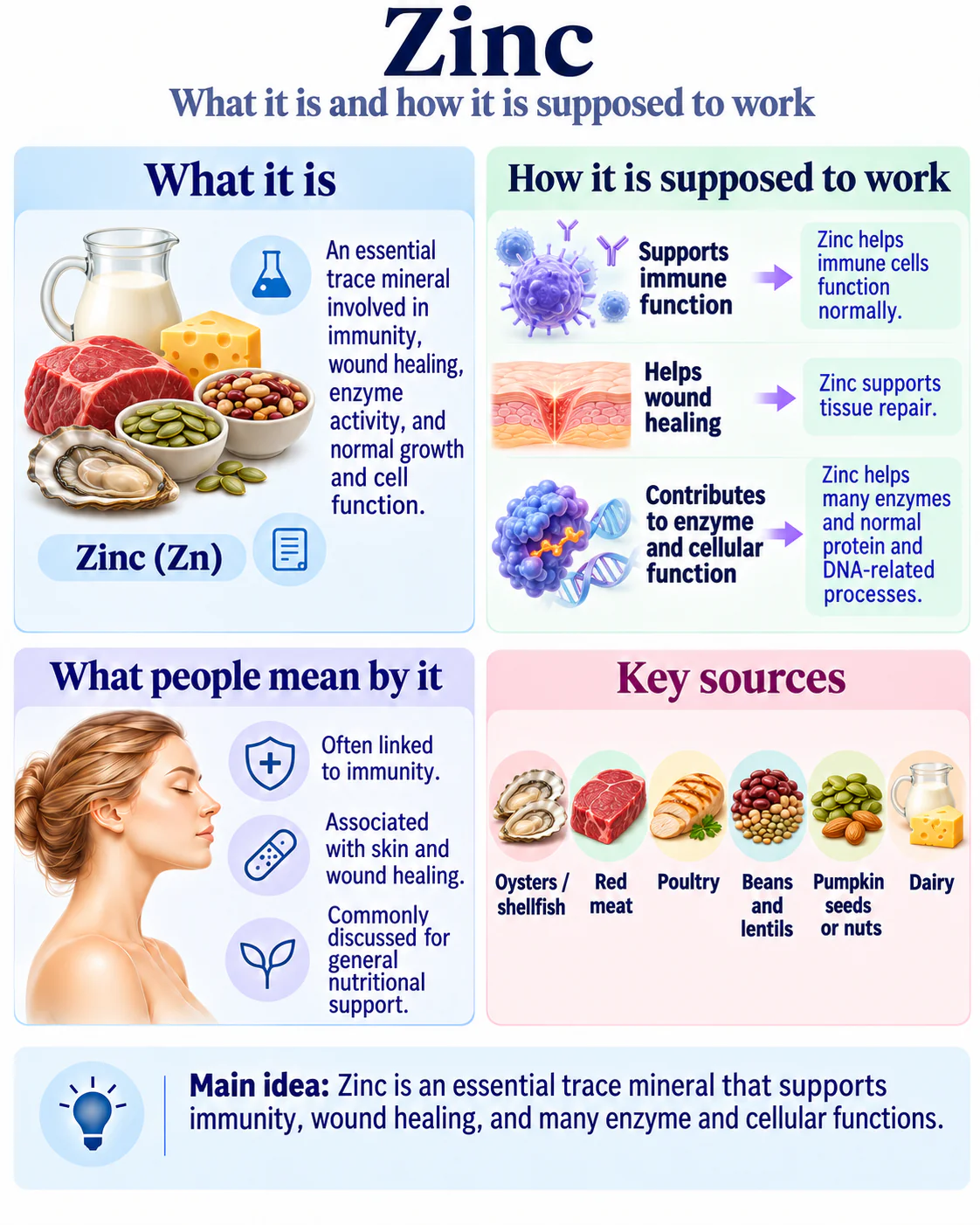
Zinc is an essential trace mineral involved in immune function, tissue repair and many enzyme reactions. Foods shown include meat, seafood, dairy, legumes, seeds and nuts. A normal immune role does not establish that extra zinc prevents infection; too much zinc can cause copper deficiency.
Food, deficiency and safety
Meat, seafood, dairy, beans, nuts and seeds provide zinc; the amount absorbed can vary with the overall diet. Inadequate zinc can impair normal function, but taking too much zinc can cause adverse effects and reduce copper absorption, leading to copper deficiency. The US NIH notes that zinc doses of 50 mg a day or more taken for weeks can reduce copper absorption, impair immune function and lower HDL cholesterol; this is a risk description, not a safe target. Zinc can also interact with some medicines. Learn more about copper and high zinc intake.1
NIH notes that taking an iron supplement containing 25 mg or more of elemental iron at the same time as a zinc supplement can reduce zinc absorption. This concerns supplements taken together, not a rule to avoid iron-containing food. If you take both, ask a pharmacist or clinician about your products and timing; do not stop prescribed iron on your own. See the iron profile.1
For context, the US upper limit for adults is 40 mg of zinc a day from all sources, including food, drinks, supplements and medicines; limits for children vary by age. An upper limit is not a recommended target or an individual safety threshold. Medical treatment may involve a different amount under professional care. Some studied AREDS eye formulas contain 80 mg of zinc plus copper; discuss the actual formula and overlapping products with the eye-care clinician rather than stopping or adding anything on your own.17
Zinc is also part of certain studied eye formulas, alongside copper and other ingredients. For the quantities, trial population and limits, see AREDS and AREDS2 for macular degeneration.7
Some denture adhesives also contain zinc. NIH notes that using large amounts well beyond label directions can lead to excess zinc and copper deficiency. Check the ingredients and follow the product directions; if you need unusually large amounts to keep a denture in place, ask a dentist to check its fit.18
Can zinc shorten a cold?
A 2024 Cochrane review found no clear evidence that preventive zinc reduced the chance of a cold. For treatment after a cold began, eight studies involving 972 people suggested a shorter average duration, but the certainty was low and results differed substantially between studies. The review included different products and routes; it cannot tell an individual how many days they would save or establish that every zinc product works. Non-serious side effects such as unpleasant taste or digestive discomfort were more common in treatment studies. Compare the distinct evidence on vitamin C and colds.
The review’s pooled estimate was about 2.4 fewer days of symptoms compared with placebo. Its 95% confidence interval ranged from about half a day to 4.2 days fewer, and the studies differed greatly in their results. Together with other limitations, that makes the estimate uncertain; it is not a promised saving for an individual. The reviewers were also uncertain whether zinc changed overall symptom severity.3
Why do individual cold studies disagree?
In a 1996 US trial, 100 employees with recent cold symptoms received zinc gluconate lozenges or placebo. The median time until symptoms resolved was 4.4 days with zinc and 7.6 days with placebo. Side effects were reported more often with zinc, including unpleasant taste and nausea.
A 2020 Finnish trial tested a different zinc acetate lozenge against placebo. Of 253 adults given study products in advance, 87 who developed a cold were included in the main analysis. Recovery rates over ten days were not statistically different; adverse effects were reported by 63% of the zinc group and 31% of the placebo group. The uncertainty around the result means this small trial cannot rule out every benefit or harm.
The studies used different lozenges and methods, and these are examples within a wider evidence base, not independent confirmation of the pooled Cochrane result. Neither trial tells us whether a particular product will help an individual. Nasal zinc is a separate safety question, discussed below.56
Why product and route matter
Oral lozenges, syrups and nasal products are different preparations. Reports of loss of smell have been associated with certain zinc-containing nasal products; do not assume evidence or safety for one route applies to another. Too much zinc over time can reduce copper absorption, and zinc can interfere with absorption of some antibiotics. A pharmacist or clinician can advise on a specific product, medicines and health situation. This page does not recommend a dose or product.41
For example, zinc supplements can reduce the absorption of some quinolone and tetracycline antibiotics when taken together. The US NIH says taking the antibiotic at least two hours before or four to six hours after the zinc supplement can minimise this interaction. Zinc can also reduce absorption and action of penicillamine, used for conditions including Wilson disease. Ask a pharmacist about your exact medicines, product and timing; do not stop prescribed treatment on your own.1
What a supplement claim needs to show
A role in immune function does not mean every zinc product prevents infection or improves wound healing in someone who is not deficient. Evidence must be assessed for a named product and outcome. Read the supplement label guide and the interaction guide for practical context.1
Further reading
Trusted external resources selected to help explain this page. They open in a new tab.
- Zinc: consumer fact sheet ↗A US nutrition summary; products and individual risks differ.
- Zinc for prevention and treatment of the common cold ↗Treatment-duration evidence was low certainty and studies varied in preparation and route.
- FDA review: intranasal zinc and loss of smell reports ↗The cited review discusses reports involving nasal zinc products; it does not give a risk rate for every product.
Sources, kept close.
Selected supporting sources; this is not a complete literature review.
- Zinc: Health Professional Fact SheetNIH Office of Dietary Supplements · Official nutrition evidence summary
- Zinc: Consumer Fact SheetUS National Institutes of Health Office of Dietary Supplements · Official consumer nutrition guidance
- Zinc for prevention and treatment of the common coldCochrane Database of Systematic Reviews / PubMed · Systematic review of randomised trials; 2024
- FDA clinical review discussing intranasal zinc-associated loss-of-smell reportsU.S. Food and Drug Administration · Historical regulator clinical review; United States; 2015
- Zinc gluconate lozenges for treating the common cold: a randomized, double-blind, placebo-controlled studyAnnals of Internal Medicine / PubMed · Randomized placebo-controlled trial abstract
- Zinc acetate lozenges for the treatment of the common cold: a randomised controlled trialBMJ Open / PubMed · Randomized placebo-controlled trial
- AREDS and AREDS2 frequently asked questionsNational Eye Institute · US government evidence summary, medicine interactions and trial questions
- Denture AdhesivesU.S. Food and Drug Administration · US patient guidance on denture adhesives